The Super Bowl is one of the biggest events of the year, with it consistently drawing in over 100 million viewers in the United States annually. This means a lot of people will be watching the ads, giving brands a chance to shape consumer culture. These 30 second slots are filled with funny, star-studded ads to help achieve that. This year, trends continue with food, financial services, and media being promoted the most in ads. However, there is a change in trends with the expected rise of ai ads and an increase in Pharma ads.
A common theme in this year’s Super Bowl ads is AI. Whether the ad itself is ai or it talks about AI, it is prevalent this year. Svedka, a vodka company, created the first AI-generated Super Bowl ad for their 30 second slot. The ad is titled “Shake Your Bots Off,” and features the company’s robot character, Fembot, and her new companion, Brobot, dancing at a party. 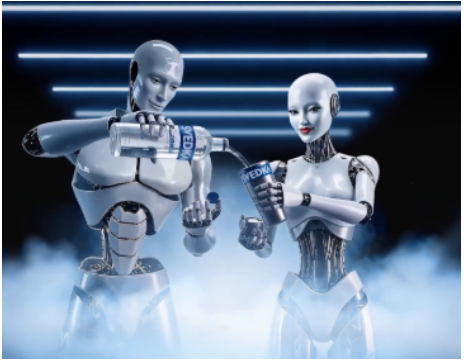 The storyline was developed by humans; the images are AI-generated. To create this ad, they partnered with Silverside AI, the same company that produced the controversial Coca-Cola AI ads. Anthropic, an AI research company, will have two commercials on Super Bowl Sunday. They dig at other AI companies for having ads in AI chatbot conversations. OpenAI executives argue that these commercials are misleading because the planned ChatGPT ads will appear labeled at the bottom of conversational responses in banners and will not alter the chatbot’s answers. OpenAI is coming out with a Super Bowl commercial of its own, though the contents of the ad have not been revealed. The AI theme continues as Meta will show an ad for their Oakley-branded AI glasses. The ad features Ishowspped and athletes like Marshawn Lynch, Sky Brown, and Akshay Bhatia using the glasses for various sports. Amazon will also show an ad for its Alexa+. The ad’s storyline follows an AI that is out to get me storyline. Apart from these, other companies will show ads for AI, such as Ring, Google, Ramp, Rippling, Him&Hers, and Wix.
Another theme this year is the rise of Pharma ads and healthcare. This has become so prevalent that the Super Bowl has been honorably named the GLP-1 Super Bowl. Some of the ads expected to run include the weight loss drug Wegovy with an ad titled “A New Way.” This ad stars Kenan Thompson, DJ Khaled, Danielle Brooks, Danny Trejo, John C. Reilly, and Ana Gasteyer. Novartis will be running an ad to encourage prostate cancer screening. The Ro health brand will promote the health benefits of GLP-1s in an ad starring Serena Williams. Other healthcare companies like Boehringer Ingelheim, Novo Nordisk, and Eli Lilly will also be airing Super Bowl ads.
Some other highly anticipated Superbowl ads this year include State Farm’s “Stop Livin’ on a Prayer” ad starring Keegan-Michael Key and Danny McBride, KATSEYE, Jake From State Farm, and Hailee Steinfeld; a Pringles ad starring Sabrina Carpender; the Uber Eats ad titled “Hungry for the Truth” starring Bradley Cooper, Matthew McConaughey, and Parker Posey; and the Ritz Crackers ad titled “Ritz Island” starring Scarlett Johansson, Jon Hamm, and Bowen Yang.
One thing a lot of these ads have in common-they all star celebrities. Celebrities have always been prevalent in Super Bowl ads. And this year, they are more prevalent than ever. A record 92 celebrities appeared in 2026 in-game ads, making 70% of Super Bowl ads featuring celebrities, up from 30% in 2018. It is reported that celebrity talent payments reached 253 million dollars for companies airing during the Super Bowl. However, it should also be noted that because of the rising use of AI in advertising, some talent fees have lowered.
253 million dollars is still a lot of money for talent alone, so that begs the question, how much do these ads cost the companies and are they actually worth the money? Well, the production can cost between two million and 25 million, depending on the ad and the company. Talent costs can be from five figures to the seven-figure range. And promotion on social media can also cost two to five million. A spot during the Super Bowl costs an average of eight million dollars, but a spot before kickoff or during the halftime show lead-in can be 10 million dollars or more. Despite these costs, many companies view it as a steal. This is because the 2026 Super Bowl is expected to have an audience of 127.7 million viewers, which is the most watched event in the United States. And it’s not just an audience for the football game itself, as many people watch the Super Bowl for the ads, leading to companies having captive viewers. The most concrete reason these ads are worth it is because of the return on investment. For every dollar spent on a Super Bowl campaign (including production), brands see an average return of $5.20 in increased sales and marketing value.
Overall, the Super Bowl ads this year have shown that companies are not afraid to spend money or one-up competitors. The growing trend in ads about wellness, self-improvement, and the integration of AI into daily life points to the theme of this year’s Superbowl ads being to sell yourself a better you.