
These interviews show that people have mixed knowledge about Native American History Month. This article is meant to provide a better understanding of this month and why it matters. The movement for a day of recognition began in the early 1900s with Seneca archaeologist Dr. Arthur C. Parker, leading New York to recognize “American Indian Day” in 1916. Since then many pushes have been made for more recognition of Native Americans. Subsequently, Congress passed Pub. L. No. 103-462 on November 2, 1994, which authorized the President to proclaim November 1993 and 1994 as “National American Indian Heritage Month.” November was chosen for Native American Heritage Month to celebrate the end of the traditional harvest season, which was a time of celebration.
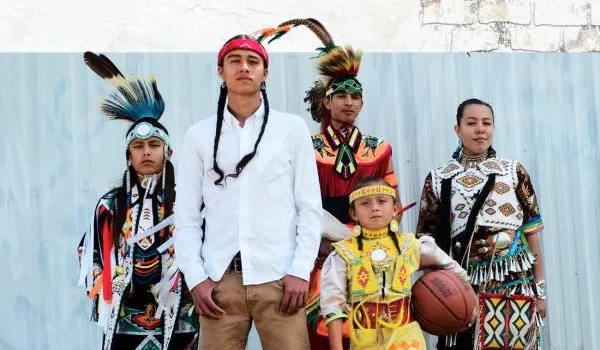
A big part of Native American History Month is to highlight the accomplishments, culture, and contributions of Native American people. Highlighting their culture, their food, like cornbread and succotash(mix of corn and beans), have been a symbol of resilience as they have been around for thousands of years and in times when their communities were suppressed, continuing to eat traditional foods was a way to resist and stay connected to their heritage. Continuing with culture, powwows are also another display of their culture. Powwows are a gathering of Native American people for singing, dancing, and traditional crafts as a way to honor their culture. The last highlight of their culture are their languages. There are an estimated 150 to 170 distinct Native American languages spoken in North America. These languages are important to the culture because they carry stories and knowledge. However, some of these languages are in danger of dying out, taking the knowledge with them.
Their contributions are also celebrated during this month. One of which is the domestication of important crops. These include: corn, potatoes, tomatoes, beans, squash, chili peppers, cacao, peanuts, avocados, and vanilla. The domestication of these crops changed diets and economies worldwide. They contributed to the system of the U.S. government, as Indigenous societies often had governments with checks and balances, representation, and other things mirroring the U.S. constitution. The Haudenosaunee Confederacy’s Great Law of Peace is cited as influencing the U.S. Constitution’s framework. They made many more contributions to government, astronomy, architecture, urban planning, medicine, and art.
They also completed many accomplishments and set precedents in many fields. For instance, Wilma Mankiller improved the quality of life for Cherokee people, leading housing, healthcare, and education projects for her community during the period of 1985 to 1995. Or from 1929 to 1933 when Dr. Charles Curtis, a member of the Kaw Nation served as the 31st Vice President of the United States, being the first Native American person to hold such a high office.
This affects you and your community because learning about Native American culture, traditions, and struggles can help everyone to develop empathy and respect for each other. This can lead to more respectful conversations and interactions. Learning about this history can also lead to community building as people learn how to be more inclusive and respectful towards Native Americans. Learning about this can help you be more aware of stereotypes and harmful misinformation. Educating yourself can also positively affect you because it can introduce you to new ideas, ways of thinking, and perspectives.
Native American History Month is from November 1st to November 30th. Though the appreciation month has just ended, learning about Native American culture is not limited to a singular month. Take this time to educate yourself and engage with your community.
“The secret of our success is that we never, never give up.” -Wilma Mankiller